Skydiving · Georgia
Skydiving in Georgia
Jump 3 drop zones across Georgia. Maps, hours, contact info, photos, and verified operator profiles, all in one place.
Southern Appalachians down to the Sea Islands and Okefenokee Swamp.
About Georgia
Best time to go
When to jump in Georgia
March through November.
- Year-round operations with the most consistent winter weather
- Summer: jump early to beat heat and afternoon storms
- A great winter destination for jumpers from colder regions
3 on the map
Tap a pin to open its profile.
Quick facts
- Drop zones listed
- 3
- Best season
- March through November
All listings
3 drop zones
across Georgia

Plan your trip
Plan your trip to Georgia
Jumping Season and Weather
Skydiving operations in Georgia typically run year-round, weather permitting. Spring and Fall offer the most consistently favorable conditions, with summer experiencing higher temperatures and more frequent afternoon weather holds. Always check with your chosen drop zone regarding their specific operating hours and weather policies.
Tandem, AFF, and Licensed Jumper Options
Most Georgia drop zones accommodate tandem students, Accelerated Freefall (AFF) students, and licensed fun-jumpers. Tandem jumps are suitable for first-timers, while AFF is a structured training program for those aspiring to become licensed skydivers. Licensed jumpers must present valid credentials (USPA license, logbook, gear inspection) upon arrival.
Age and Weight Requirements
The minimum age for skydiving in Georgia, as per U.S. Parachute Association (USPA) guidelines, is 18 years old. Weight limits vary by drop zone, typically ranging from 220 to 250 pounds, with some requiring an additional fee for jumpers over a certain weight. Specific requirements should be confirmed directly with the drop zone.
Your First Jump Experience
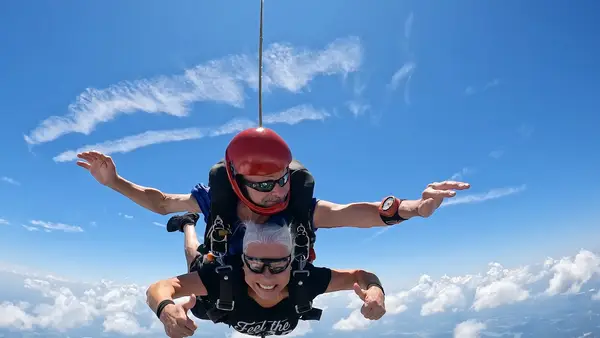
A first tandem skydive involves a brief ground school, gearing up with an instructor, a scenic plane ride, the jump itself (freefall followed by parachute ride), and a soft landing. The entire experience, from arrival to departure, can take several hours, so plan accordingly and arrive hydrated and well-rested.
Accelerated Freefall (AFF) Progression
The AFF program is designed to teach students to skydive solo. It begins with extensive ground school, followed by a series of coached jumps where two instructors hold onto the student in freefall. As the student progresses, instructor assistance decreases until they are cleared for solo freefall, leading to a USPA A-license.
Confirm current requirements with the state agency before your trip. Rules and fees change every season.
FAA Part 105 Regulations
All skydiving operations and participants in Georgia must adhere to Federal Aviation Administration (FAA) Part 105 regulations, which govern parachute operations. These regulations cover equipment standards, airspace requirements, and operational procedures to ensure safety.
USPA Basic Safety Requirements (BSRs)
While not a federal mandate, most reputable drop zones in Georgia operate under the U.S. Parachute Association (USPA) Basic Safety Requirements (BSRs). These guidelines provide an additional layer of safety standards for equipment, training, and operational procedures, which are crucial for both student and licensed jumpers.
Drop Zone Specific Policies
Each skydiving drop zone in Georgia will have its own specific operational policies regarding age, weight, medical conditions, and participant conduct. These policies are designed to complement FAA regulations and USPA BSRs, ensuring the safety and smooth operation of their facility. Always review and comply with the drop zone's specific rules.
- 01
Research Drop Zones
Start with USPA-affiliated drop zones in Georgia. Weigh location, reviews, aircraft, and services to find one that fits your preferences and skill level.
- 02
Book Your Jump
Once you've settled on a drop zone, book your tandem or ask about AFF ground school dates. Reservations are usually a must, especially in peak season.
- 03
Complete Waivers and Briefing
When you arrive you'll sign the waivers and sit through a full safety briefing. Listen closely and get your questions answered before you gear up.
- 04
Make the Jump
Climb to altitude, ride the freefall, fly the canopy, and land safe. This is what all the prep was for, and the best part of the day.
- 05
Consider Further Training
If the first jump hooks you, look into an Accelerated Freefall (AFF) program toward a license. Talk it over with the drop zone's instructors or manifest staff.
01What is the minimum age for skydiving in Georgia?
02Are there weight limits for skydiving?
03What should I wear for my skydive?
04How long does the entire skydiving experience take?
05Can I jump solo on my first skydive?
06What is the Accelerated Freefall (AFF) program?
Free tools
Your free outdoor toolkit

Everything Map
Listings, trails, spots, clubs and public land on a single full-screen map. Switch layers on and off, then tap any point for the details.
Open Everything MapRoute Planner
Drop stops on a map and watch distance and drive time add up. Export a GPX or share the link.
Open Route PlannerSkydiving Clubs
Browse local clubs with meeting info and how to join, or start your own for free.
Open Skydiving ClubsPhoto ID
Point your camera at whatever you found and get a structured identification. No signup.
Open Photo IDGear Checklists
Printable, save-as-you-go packing lists. Tick items off and pull them up on your phone.
Open Gear ChecklistsMaintenance Schedules
Pick your machine and get its full service schedule. Add your hours to turn intervals into dates.
Open Maintenance Schedules
Keep exploring