Skip to content
Kansas skydiving sky. Backdrop for the Skydiving Hubs Kansas drop zone directory

Skydiving · Kansas

Skydiving in Kansas

Jump 2 drop zones across Kansas. Maps, hours, contact info, photos, and verified operator profiles, all in one place.

Tallgrass prairie remnants and the Smoky Hills.

Updated

On the map

Drop zones in Kansas

Everything we have mapped in Kansas, on one map. Tap anything for its details.

Loads the full map of Kansas. We leave it off by default so the page opens fast on mobile data.

About Kansas

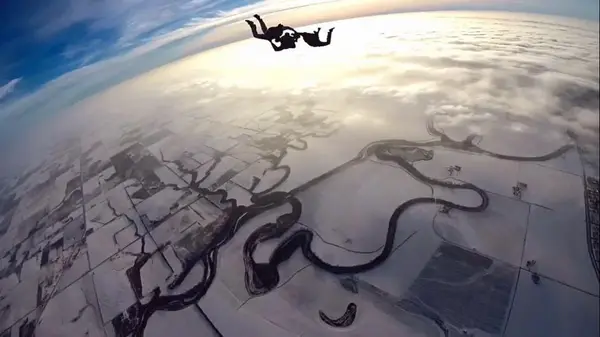
The ground in Kansas reads like a map from altitude: section-line roads ruled at right angles, irrigation circles stamped green against tilled brown, the Kansas River threading through it all. Flat country makes for honest skydiving. You can see the horizon in every direction, the landing area never hides behind a ridge, and the drop zones sit near small towns where the airspace is quiet and the pattern is yours. First-time tandem students and licensed jumpers both get the same thing here, room and visibility.

Students working through the Accelerated Freefall (AFF) program benefit from that open sky. There are no congested corridors forcing early break-off, no crowded pattern to fight on final. Instructors have altitude and space to teach freefall maneuvers, and the conditions hold steady enough that progress through the AFF levels tends to be steady too. New jumpers usually find the crowd welcoming, Kansas drop zones run small and personal, which suits someone still learning to trust the canopy over their head.

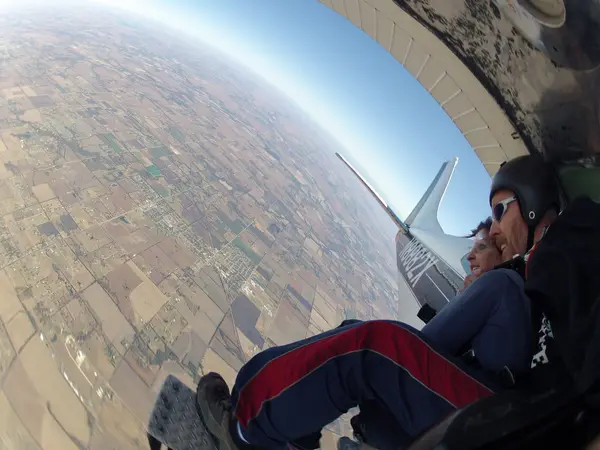
Tandem jumping is the easy way in. Harnessed to a certified instructor, you get the freefall and the canopy ride without the training load, and the view does real work: the Flint Hills rolling out in tallgrass, the Smoky Hills breaking the flat, fields stitched together to the edge of sight. The busiest drop zones sit within driving range of Wichita, Topeka, and the Kansas side of Kansas City, so most of the state's population is a morning's drive from a jump.

Licensed fun-jumpers find full-service operations here: relative work, freeflying, load organizing, the occasional event. Kansas sits in the middle of the country, which makes it a natural stop for jumpers crossing it. The clear central-plains air is the recurring advantage: good visibility, clean sight lines, and the kind of high, stable days that let a load climb to full altitude without argument.

When to jump in Kansas

Peak Jun–Aug

Full season

Quick facts

Drop zones listed
2
Best season
April through October

Trip guide

Know before you go in Kansas

Confirm current requirements with the agency that sets them before your trip. Rules and fees change every season.

  • Age Requirement for Skydiving

    All individuals participating in skydiving activities in Kansas, including tandem jumps and AFF training, must be at least 18 years of age. This is a United States Parachute Association (USPA) Basic Safety Requirement, the FAA sets no minimum jump age, and every USPA-affiliated drop zone enforces it.

  • USPA Membership for Licensed Jumpers

    Licensed skydivers planning to jump at Kansas drop zones are generally required to hold a current membership with the United States Parachute Association (USPA). This ensures adherence to industry safety standards and provides insurance coverage.

  • FAA Medical Certification for Pilots and Instructors

    Pilots flying jump aircraft must hold a current FAA medical certificate. Skydiving instructors are not required to: neither AFF nor tandem instructors need an FAA medical certificate, a tandem instructor's Part 105.45 qualifications are experience, jump count, a master parachute license, and manufacturer certification, with no medical certificate among them.

01What is the minimum age to skydive in Kansas?
You must be 18 to skydive in Kansas, tandem or student, no exceptions. It's a United States Parachute Association (USPA) Basic Safety Requirement, not an FAA rule; federal regulations set no minimum age, and every reputable drop zone in the state holds to it and checks ID.
02Are there weight restrictions for skydiving in Kansas?
Yes. Most drop zones cap tandem weight somewhere between 220 and 250 pounds for safety, and some will take heavier jumpers with the right gear or a surcharge. Confirm the exact limit with your drop zone before you book, not on jump day.
03What should I wear for my skydive?
Comfortable athletic clothes for the day's weather, with layers if it's cool. Closed-toe athletic shoes are required, leave the sandals and the hook-and-lace boots at home, along with anything loose that could snag.
04How long does the skydiving experience take from start to finish?
The freefall and canopy ride are only a few minutes, but the day is longer. Between check-in, paperwork, training, gearing up, and the jump itself, budget 2 to 4 hours, more if the manifest is busy or weather stalls the loads.
05Can I get photos or videos of my skydive in Kansas?
Most Kansas drop zones sell photo and video packages, arranged when you book or when you check in. Depending on the operation, that's either a videographer jumping with you or a hand-cam mounted on your instructor's wrist.
06Do I need any special certification to do an AFF jump?
No certification going in. But your first AFF jump comes after real ground training (emergency procedures, freefall body position, canopy control), so you'll have the fundamentals before you ever leave the plane.

Keep exploring

Nearby states