Best Time to Go
When to go
Skydiving happens whenever the weather cooperates: clear skies, light winds, and good visibility. So the "best time" is the season with the most jumpable days in your area. Warm, stable months mean more airtime and fewer weather holds. Mornings are typically the calmest part of any day.
- Month-by-month conditions
- Free
- No signup

Sun Belt (FL, AZ, CA, TX)
Warm-weather drop zones in the South and Southwest jump year-round. Winter offers pleasant, stable conditions; summer afternoons can bring heat, haze, and storms, so many jumpers go early.

Northern US
Drop zones across the northern states run a warm-season schedule. The bulk of jumping happens late spring through early fall, with many smaller DZs closing or going weekends-only in winter.

Mountain West & High Desert
High-elevation and high-desert drop zones favor the stable, dry air of spring through fall. Thermals build on hot afternoons, so mornings are prized; winter brings cold and variable conditions.
More free tools
Other tools in this kit

Everything Map
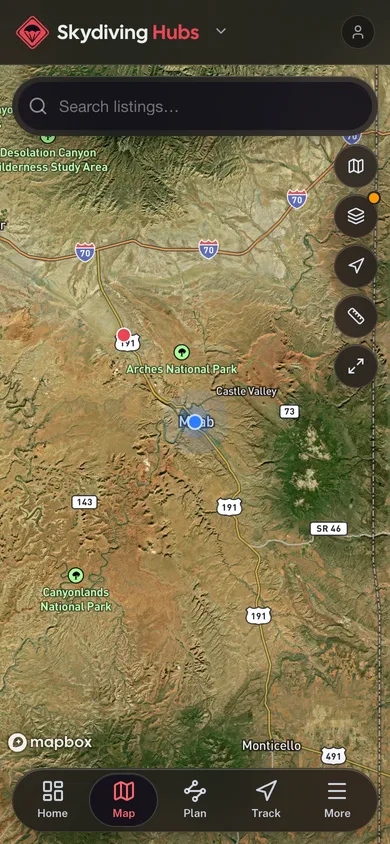
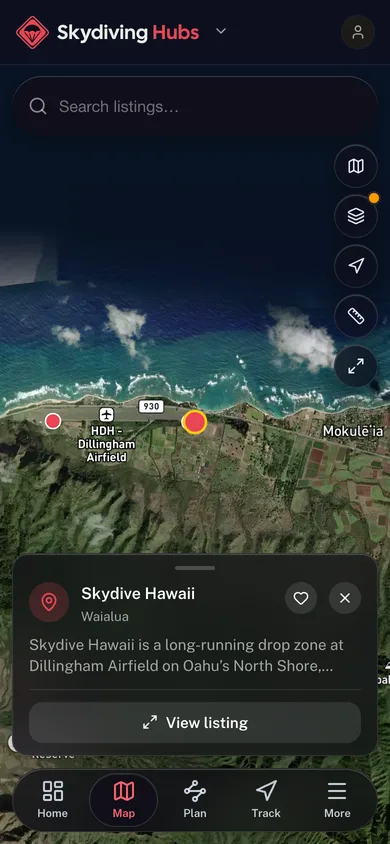
Listings, trails, spots, clubs and public land on a single full-screen map. Switch layers on and off, then tap any point for the details.
Open Everything MapRoute Planner
Drop stops on a map and watch distance and drive time add up. Export a GPX or share the link.
Open Route PlannerSkydiving Clubs
Browse local clubs with meeting info and how to join, or start your own for free.
Open Skydiving ClubsLive Conditions
Real-time conditions spot by spot, pulled from public weather feeds, before you commit to the drive.
Open Live ConditionsBest Time to Go
Month-by-month seasonality by region, so you plan around the best conditions instead of guessing.
Open Best Time to GoPhoto ID
Point your camera at whatever you found and get a structured identification. No signup.
Open Photo ID