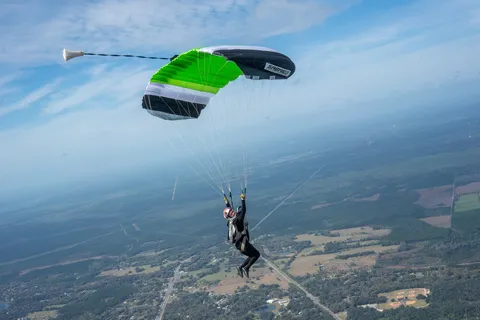
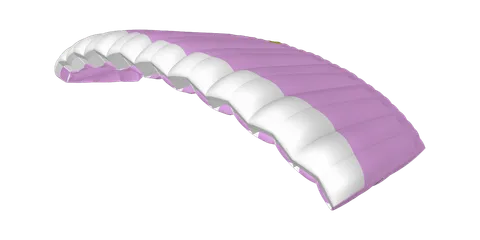
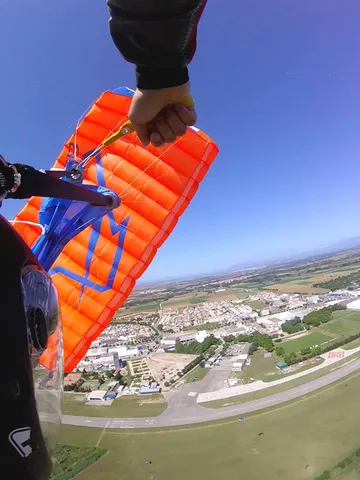
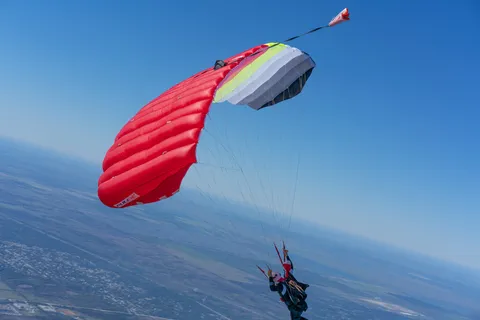
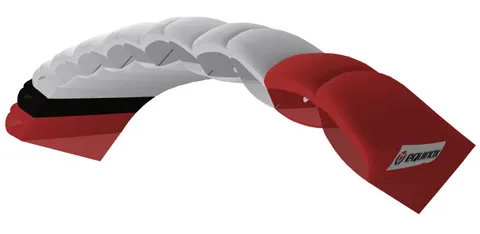
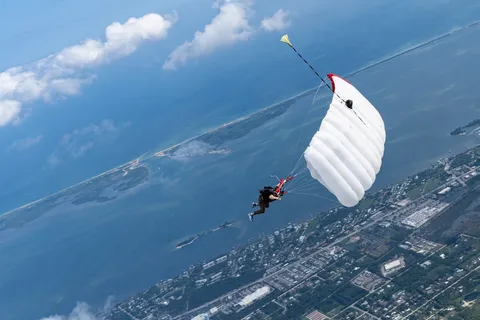
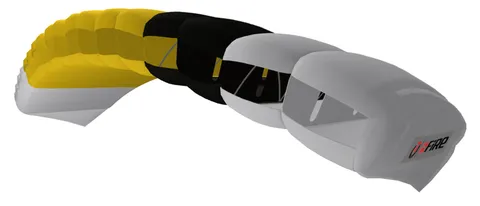
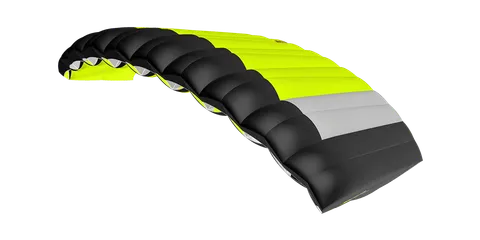
A main canopy is the single piece of skydiving equipment that most changes how your jumps feel. The container holds it, the AAD watches over you, but the wing over your head decides how the opening treats your neck, how much runway you need on final, and whether a downwind landing on a hot day is a non-event or a story you tell in the hangar. In 2026 the sport-canopy market is small and specialized. Five manufacturers cover almost everything a licensed jumper or student will realistically buy: Performance Designs, JYRO (formerly NZ Aerosports, still widely called Icarus NZ), Icarus World, Aerodyne Research, and Fluid Wings.
Prices run from roughly $2,100 for an entry-level all-rounder to well past $4,500 for a cross-braced competition wing, and almost every canopy in that span is built to order in a specific size, fabric, line type, and color layout. Lead times of eight to twelve weeks are normal. That build-to-order reality is why you will not find these on Amazon and why a shelf-stock canopy at a dealer sometimes sells within hours. It also means the price you pay depends on choices you make: ZPX or low-bulk fabric usually adds a couple hundred dollars, HMA versus Dacron lines changes both price and pack volume, and a custom color scheme can add to the bill.
The thing worth saying plainly before any list: the difference between a $2,600 canopy and a $4,300 canopy is not safety, and it is not build quality. Every wing here is TSO-adjacent sport equipment from a reputable manufacturer with real quality control. What you are buying as you move up the price ladder is a more aggressive planform, a longer recovery arc, and less margin for a bad input near the ground. A licensed jumper with 120 jumps is better served by a Sabre3 or a Safire 4 at a sane wing loading than by anything cross-braced, no matter what the credit card allows. Size and wing loading matter more than model, and model matters more than price.