Skip to content
Top-rated outdoor gear, ranked

Best Of 2026

Best Skydiving Gear Bags of 2026

Our top 8 picks, independently ranked. Budget to premium.

A gear bag is the single piece of skydiving kit you touch on every jump day, yet it's the one most jumpers buy last and think about least. Your rig (main, reserve, container, AAD), represents a $6,000–$9,000 investment, and a good bag is what protects it from sun, grit, hangar floors, baggage handlers, and the slow abrasion of being thrown in and out of a car a hundred times a season. The right bag also keeps a jumpsuit, helmet, altimeter, gloves, goggles, and a logbook organized instead of jumbled, so you spend manifest time gearing up rather than digging.

The market splits into a few clear shapes. Classic two-compartment dropzone bags (think the old Dakine Cargo lineage that ChutingStar and others revived) hold a packed rig in back and accessories in front. Lightweight pack-mat wraps like the RigSleeve disguise your rig as an ordinary backpack so you can carry it onto an airplane. And big wheeled travel rigs like the OGIO Rig 9800 are built for flying to a boogie with a full kit. What you should buy depends far more on how you jump, local weekends versus international travel, than on how much you spend.

This guide covers real, currently sold models spanning roughly $85 to over $350, chosen so a student buying their first bag and a traveling fun-jumper packing for a boogie can both find the right tool. We've kept the focus on bags that actually fit a skydiving rig and the gear that goes with it, not generic duffels that happen to be cheap.

At a glance

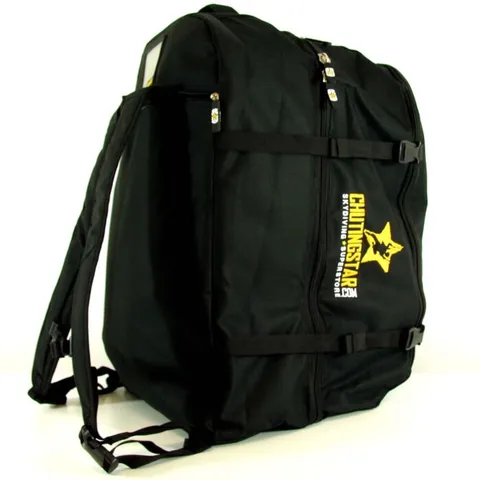
ChutingStar Skydiving Rig Gear Bag Backpack
Best OverallBudget

1. ChutingStar Skydiving Rig Gear Bag Backpack

ChutingStar

$60–$90

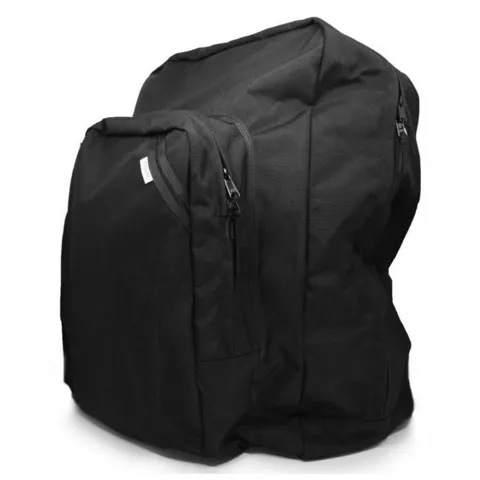
A modern revival of the beloved discontinued Dakine Cargo bag, reinforced and refined into the default dropzone bag many jumpers recommend first. Two big compartments and a sub-$100 price make it the easiest bag to recommend across skill levels.

Best for: Any sport jumper or student wanting one durable do-everything dropzone bag

Two large compartments: packed rig in back, jumpsuits and accessories up front · Tough 900D polyester + PVC with large-tooth zippers and multiple carry handles · Hideaway padded shoulder straps and chest strap for backpack carry · Fits rigs up to a 230 main with room to spare

Not a disguised/carry-on shape for air travel · One size only, no small or tandem-specific option
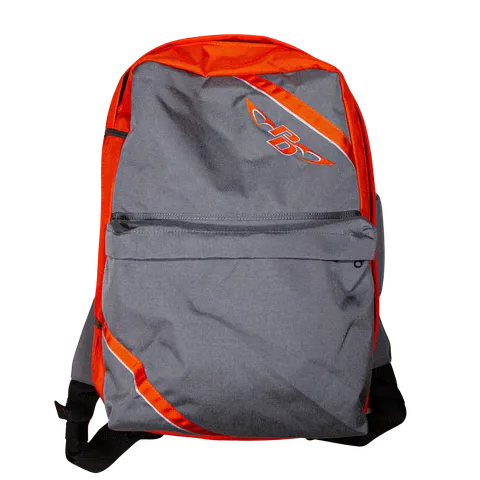
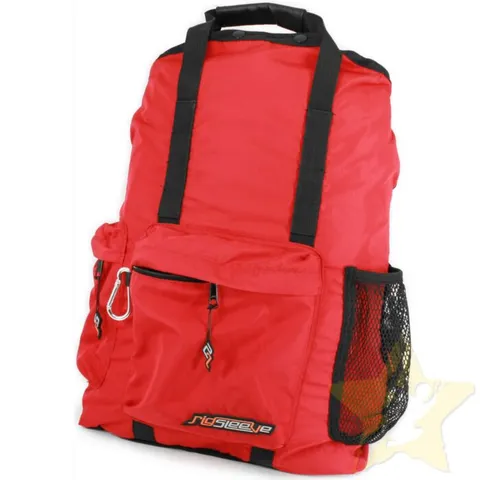
PD Skydiving Gear Bag
Best ValueMid-range

2. PD Skydiving Gear Bag

Performance Designs

$130–$145

From the canopy maker most jumpers already trust, this bag nails organization with dedicated pockets for jumpsuits, gloves, and altimeters, and comes in three sizes so you can match it to your exact rig. A smart, well-finished pick that punches above its price.

Best for: Jumpers who want size-matched fit and tidy accessory organization

Three sizes (Small up to ~120, Medium up to ~230, Large for big/tandem rigs) · Thoughtful pockets for jumpsuit, gloves, altimeter and small gear · Backed by Performance Designs' reputation and dealer network

Choose the size carefully, fits are snug at the stated canopy limits · Conventional shape, not built for carry-on travel

RigSleeve Skydiving Rig Gear Backpack
Editor's PickBudget

3. RigSleeve Skydiving Rig Gear Backpack

RigSleeve

$94–$104

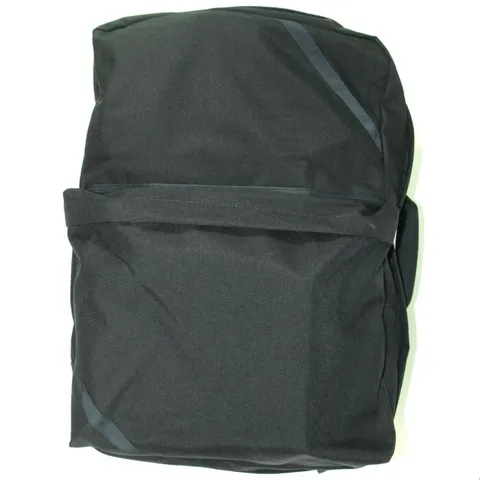
A lightweight pack-mat wrap that disguises your rig as an ordinary backpack, ideal for carrying a $7k+ investment onto the plane instead of checking it. Doubles as a packing mat and includes handle sleeves to guard against accidental deployments in transit.

Best for: Traveling jumpers who want to carry their rig on as low-profile carry-on

Looks like a normal backpack for a 'flying-friendly' carry-on · Unfolds into a packing mat; works with any packing style · Handle Sleeves help prevent accidental handle pulls · Very light and sleek; also suits BASE rigs

It's essentially a protective cloth wrap, some feel it's pricey for what it is · Far less accessory storage than a structured dropzone bag

Akando Parachute Gear Bag 3.0
Best BudgetBudget

4. Akando Parachute Gear Bag 3.0

Akando

$85–$95

A genuinely tough bag at the lowest sensible price, with a reinforced tarpaulin bottom and heavy-duty zippers, yet light enough (about 1.4 kg) to keep checked-baggage weight down. The value benchmark for a first gear bag.

Best for: Students and budget-minded jumpers buying their first real gear bag

Lowest price among purpose-built bags here (~$85) · Reinforced tarpaulin bottom and heavy-duty zippers · Lightweight at ~1.4 kg, with padded shoulder straps and A4 inner pocket · Sold widely through Para Gear, ChutingStar and Akando direct

Simpler organization than pricier bags · Single size; large/tandem rigs may not fit comfortably

OGIO Rig 9800 Gear Bag
Premium

5. OGIO Rig 9800 Gear Bag

OGIO

$200–$360

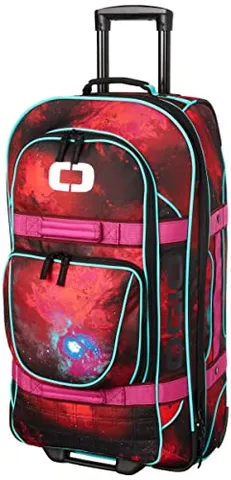
Not skydiving-specific, but a longtime favorite for flying to boogies with a full kit, a cavernous, well-organized wheeled travel bag with a padded helmet chamber and pressure-fit storage. The go-to when you need to haul everything in one checked bag.

Best for: Travelers hauling a complete kit to boogies and overseas events

Huge capacity swallows a rig plus jumpsuits, helmet and accessories · Wheeled with a padded helmet/electronics chamber and many pockets · Built for air travel; rugged enough for baggage handling

Designed for moto/powersports, not sized specifically to a rig · Heavy and bulky: it's checked luggage, not a carry-on · Top of the price range, especially Pro and wheeled variants

Fliteline Skydiving Rig Gear Bag
Mid-range

6. Fliteline Skydiving Rig Gear Bag

Fliteline

$135–$155

A Florida-made two-compartment bag in three sizes, built by a long-standing skydiving manufacturer. A solid, no-nonsense alternative to the ChutingStar and PD bags with similar capacity and organization.

Best for: Jumpers wanting a US-made size-matched dropzone bag

Two large compartments for rig plus jumpsuit, altimeters and goggles · Three sizes to match different rigs · Made in the USA by an established skydiving brand

Less widely reviewed than the top sellers · Conventional shape, not travel-disguised

Dakine Ranger Duffle 90L Gear Bag
Mid-range

7. Dakine Ranger Duffle 90L Gear Bag

Dakine

$130–$150

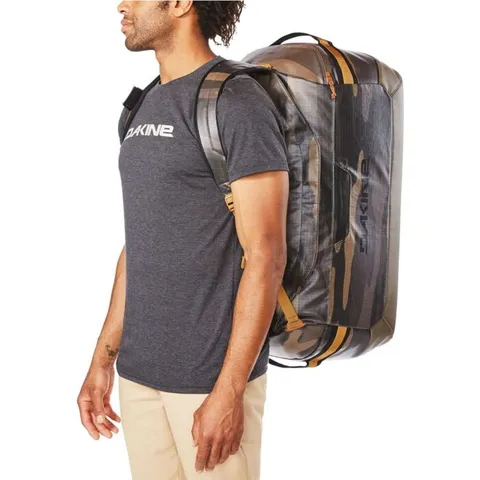
A 90L duffel-backpack hybrid that's a favorite for jumpers who carry far more than just a rig: packing mat, multiple jumpsuits, helmet and camera gear all in one cavernous, haul-it-all bag with backpack straps.

Best for: Camera flyers and load organizers who haul a lot of gear at once

Massive 90L capacity for everything you bring to the dropzone · Converts to backpack carry for hands-free hauling · Durable Dakine construction with grab handles all around

No rig-specific compartment, a single big bucket inside · Overkill if you only need to carry one rig

Windline Skydiving Equipment Gear Bag
Budget

8. Windline Skydiving Equipment Gear Bag

Windline

$85–$95

A straightforward, affordable equipment bag that covers the basics (protect the rig, stow the accessories), for jumpers who want a reliable second or backup bag without spending much.

Best for: Budget buyers or anyone wanting an inexpensive backup gear bag

Affordable at around $90 · Simple, functional rig-plus-accessories layout · Stocked by major skydiving retailers

Fewer features and less organization than the category leaders · Limited size and configuration options

How we choose

We ranked these by overall recommendation for licensed jumpers and students (how well each protects and carries a packed rig, how it organizes accessories, build quality, and value at its price), not by cost. We grouped them into three tiers: budget (roughly under $100, simple but durable dropzone-day bags), mid ($100–$180, better organization, sizing options, or travel-friendly design), and premium (over $180, customizable or built for serious air travel). Prices are current US street ranges shown for orientation only and vary by size and retailer. This is an independent editorial guide: we accept no payment from manufacturers for placement, rankings reflect our own assessment of publicly available product information and skydiving-community use, and any retailer links are for convenience and may be affiliate links that never affect a product's position.

Common questions

Match the bag to your main canopy size and container. As a rule of thumb, small bags fit rigs with mains up to roughly a 120, medium handles up to about a 230 (covering most sport jumpers), and large sizes swallow big student or tandem rigs. When in doubt, size up, a rig that's a tight squeeze is hard to load and abrades faster. Brands like Performance Designs and Fliteline publish exact dimensions per size, so measure your packed container before ordering.

Yes. The FAA explicitly allows parachutes in the cabin, and most jumpers carry their rig on rather than checking it. A low-profile bag that doesn't scream 'parachute' makes security smoother, that's the whole point of products like the RigSleeve, which looks like an ordinary backpack and includes handle covers to prevent accidental pulls. For a full kit (rig plus jumpsuits, helmet, and accessories) on a longer trip, a wheeled travel bag like the OGIO Rig 9800 is popular, though it's checked luggage, not carry-on.

It's one of the first purchases worth making once you're jumping student or rental gear regularly, especially if you've bought your own helmet, jumpsuit, altimeter, and goggles. A modest two-compartment dropzone bag keeps your kit organized and protected for under $100 and will still serve you after you buy your first rig. Hold off on a large rig-specific bag until you know your container and canopy size.

For protection and longevity, yes: purpose-built skydiving bags use heavier fabrics (often 900D polyester or ripstop), reinforced or tarpaulin bottoms, large-tooth zippers, and compartments sized to a packed rig so your gear isn't crushed or exposed to UV. A generic duffel offers none of that fit. That said, you don't need the priciest option: the sweet spot for most jumpers is a well-made $90–$145 bag, with premium customizable or wheeled-travel models reserved for those who want them.

They're completely different items. A gear bag is the luggage you use to transport and store your rig and accessories on the ground. A deployment bag (d-bag) is the small fabric bag inside your container that stows the main canopy and lines during the jump. This guide covers ground transport gear bags only: if you need a replacement d-bag, buy the one matched to your specific container (Sun Path Javelin, UPT Vector, etc.).

Keep your rig out of direct sunlight whenever it's bagged, UV is the enemy of nylon, and never leave a packed bag baking in a hot car, which degrades the AAD and fabrics. Don't store gear damp; let a wet rig and jumpsuit air out before bagging. Periodically wipe down the bag, check zippers and stitching, and avoid dragging the bottom across rough hangar floors. A reinforced-bottom bag plus these habits will easily last many seasons.

Some links are affiliate links, and we may earn a commission at no extra cost to you. It never affects our rankings.

In your pocket

Take every dropzone with you.

Free, no account needed. Dropzone maps, gear checklists, and your jump log in your pocket.

  • Every dropzone in your pocket

  • Round up your crew with group chat

  • Your jump log in one timeline

  • Prep checklists synced to your account

The Skydiving Hubs app dashboard

For operators

Run a skydiving business?
Get on the map for free.

Claim your free listing for a branded page and a spot in the Skydiving Hubs app, then add bookings and digital waivers whenever you’re ready. No setup cost.