Skip to content
Top-rated outdoor gear, ranked

Best Of 2026

Best Skydiving Automatic Activation Devices of 2026

Our top 10 picks, independently ranked. Budget to premium.

An automatic activation device is the one piece of gear on your rig that you hope never does anything. It watches barometric pressure, and if it sees you passing a preset altitude above the ground while still descending faster than a preset speed, it fires a cutter that severs the reserve closing loop. It does not fly the canopy, it does not guarantee a survivable landing, and it does not care whether you were unconscious or simply low. It buys one last chance.

The market is unusually small. Three manufacturers build the AADs that sport jumpers actually fit: Airtec (CYPRES 2), Advanced Aerospace Designs (Vigil Cuatro), and MarS a.s. (m2 multi). The entire new-unit price spread runs from roughly $1,075 to about $1,600, so the low end and the high end are separated by less than the cost of a mid-range main canopy. That compression matters, because it means the real decision is rarely about saving money. It is about mode structure, service model, and how long the unit will keep working before you have to buy another.

Those three things pull in different directions. CYPRES sells fixed-parameter units (or one changeable unit) with a 15.5 year life and factory service at 5 and 10 years that includes a fresh battery. Vigil sells a single multimode unit with a 20 year maximum life, no scheduled service, and a mandatory battery replacement somewhere between 8 and 12 years. MarS sells a five-mode unit with a 15 year 6 month or 15,000 jump life, no factory service, and no battery change at all. Students should also know that the mode on the unit matters more than the brand: a Student CYPRES and an Expert CYPRES behave differently under a partially inflated canopy, and putting the wrong one in a rig is a real mistake that a rigger should catch.

At a glance

#ProductPrice
1$1,400–$1,550
2
Vigil Cuatro (One Pin)

Advanced Aerospace Designs

$1,250–$1,290
3
m2 multi

MarS a.s.

$1,076–$1,100
4$1,400–$1,550
5$1,400–$1,550
6$1,400–$1,550
7
Vigil Cuatro (Two Pin)

Advanced Aerospace Designs

$1,400–$1,450
8$1,400–$1,550
9$1,450–$1,650
10$850–$1,050
Expert CYPRES 2
Best OverallPremium

1. Expert CYPRES 2

Airtec

$1,400–$1,550

The default AAD in sport skydiving, and the one nearly every US rigger and drop zone already knows how to install, test and troubleshoot. It fires at roughly 750 feet AGL when your descent rate reaches 78 mph (35 m/s), which is the setting most sport rigs are built around.

Best for: Licensed jumpers who want the conservative, universally supported choice.

Deepest field record and the widest rigger familiarity of any AAD in the US · 15.5 year service life with factory service at 5 and 10 years that includes a fresh battery · Compact control unit and cutter that fit tight reserve trays without argument · Waterproof to roughly 1.5 m for 24 hours

Highest sticker price in the category, plus two mandatory service visits · Fixed single mode, so a swooper or a student needs a different unit entirely · Your rig is out of service for the turnaround each time it goes back to the factory
Vigil Cuatro (One Pin)
Best ValueMid-range

2. Vigil Cuatro (One Pin)

Advanced Aerospace Designs

$1,250–$1,290

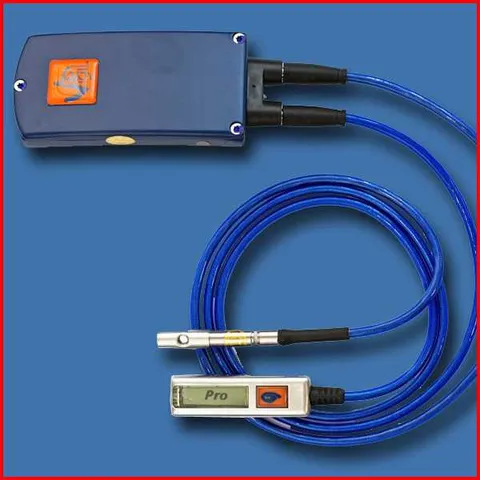
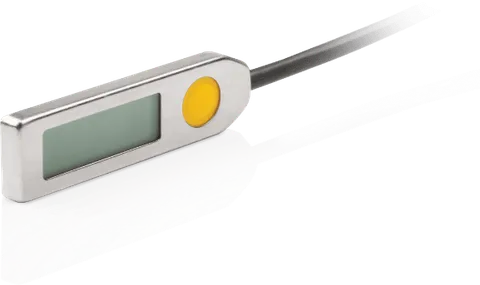
Four modes in one unit (Pro, Student, Tandem, Xtreme), a 20 year maximum life and no scheduled factory maintenance, for around $110 less than a CYPRES. In Pro mode it fires between roughly 840 and 1,100 feet depending on body position, down to 150 feet, at 78 mph or faster.

Best for: Jumpers who want one unit that can follow them from student rig to swoop rig.

Switch between Pro, Student, Tandem and Xtreme without sending the unit anywhere · 20 year maximum life expectancy, the longest in the category · No scheduled maintenance, and the cutter and control unit are field replaceable · IP68 waterproofing, useful for water jumps and coastal drop zones

A factory battery replacement between 8 and 12 years pushes real ownership cost closer to $1,500 · User-switchable modes make some drop zones nervous on rental and student gear · Slightly larger footprint than the CYPRES control unit

m2 multi
Best BudgetBudget

3. m2 multi

MarS a.s.

$1,076–$1,100

The cheapest new AAD you can put in a sport rig, with five selectable profiles (Student, Intermediate, Professional, Canopy Piloting, Tandem), no factory maintenance and no battery change for the life of the unit. It is a serious device sold at a serious discount to the other two.

Best for: Cost-conscious jumpers and first-rig buyers who want full multimode capability.

Roughly $200 to $325 less than a CYPRES 2 before you count any service · No factory maintenance and no battery replacement across the full 15 year 6 month life · Five modes including a dedicated Canopy Piloting profile for swoopers · Small stainless cutter with a flat body, user replaceable, and watertight to 2 m for 24 hours

Life is capped at 15 years 6 months or 15,000 jumps, whichever arrives first · Fewer US riggers have hands-on time with it, which matters when something looks wrong · Resale value is softer than a CYPRES with equivalent life remaining

Changeable Mode CYPRES 2 (C-Mode)
Best PremiumPremium

4. Changeable Mode CYPRES 2 (C-Mode)

Airtec

$1,400–$1,550

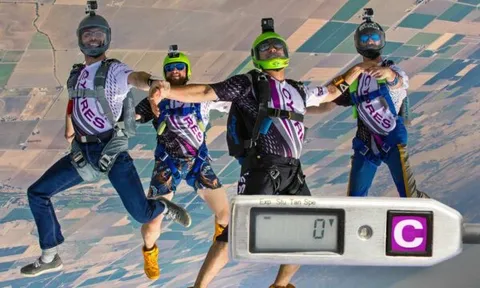
A CYPRES 2 that can be set in the field to Expert, Student, Tandem or Speed parameters, identified by the magenta button, at the same price as a fixed-mode unit. It is the answer for a drop zone or a jumper whose discipline is going to change during the unit's 15.5 years.

Best for: Drop zones and progressing jumpers who need Expert now and Speed or Tandem later.

Four sets of activation parameters in one unit, changed by a deliberate button sequence · Costs the same as a single-mode CYPRES 2, so the flexibility is effectively free · Current setting is displayed on the control unit, which makes gear checks fast · Ideal for DZ fleets that move one unit between tandem, student and rental rigs

Same premium price and same 5 and 10 year factory service obligations as any CYPRES 2 · A field-changeable mode is one more thing for a rigger to verify before every pack job · Overkill for a jumper who will only ever fly one discipline

Student CYPRES 2
Editor's PickPremium

5. Student CYPRES 2

Airtec

$1,400–$1,550

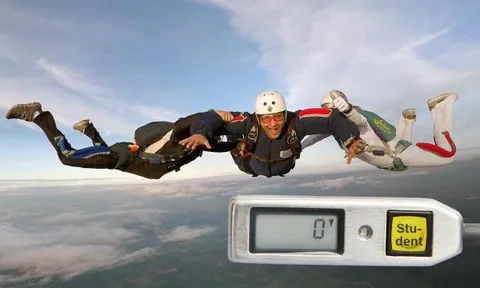
The unit most US student programs standardize on, and the reason is its dual parameter set: it fires at roughly 750 feet in freefall, and raises to about 1,000 feet if your descent rate is still above 29 mph under a partially inflated canopy. That second case is the one that actually kills students.

Best for: Students, AFF programs and anyone building a first rig before their A license.

Catches a partially open or spinning canopy at 29 mph, well below normal freefall speed · Higher 1,000 ft activation in that case buys real margin during a low deployment problem · Same 15.5 year service life and factory support as the rest of the CYPRES 2 line · Rigging, testing and paperwork are familiar to every student DZ in the country

Airtec recommends switching it off if the jump is aborted, because an aircraft descent can trigger it · The sensitive settings are wrong for anyone doing canopy piloting or high-speed work · You will outgrow it, and a fixed-mode unit cannot be reconfigured later

Speed CYPRES 2
Premium

6. Speed CYPRES 2

Airtec

$1,400–$1,550

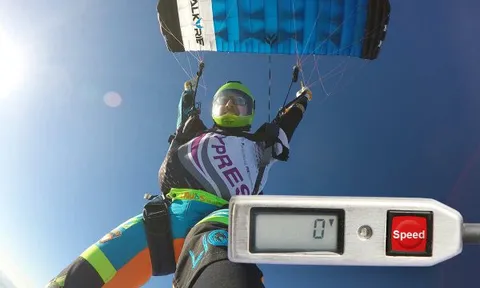
Built so that a deliberate high-speed canopy approach does not trip your reserve. It uses the highest activation speed of any CYPRES at 102 mph (46 m/s) with a default activation altitude of 750 feet, and it stops working entirely below 330 feet.

Best for: Canopy pilots and competitive swoopers who want backup without nuisance fires.

102 mph threshold keeps aggressive swoops from triggering an unwanted activation · Ceases operation below 330 ft AGL, which is where a canopy pilot is working hardest · Same build, cutter and 15.5 year support as the rest of the CYPRES 2 family

That high threshold means a slower spinning malfunction may not reach the firing speed · Wrong unit for anyone not actively competing or training in canopy piloting · Fixed mode, so a change of discipline means buying another unit

Vigil Cuatro (Two Pin)
Mid-range

7. Vigil Cuatro (Two Pin)

Advanced Aerospace Designs

$1,400–$1,450

The same four-mode Cuatro with a second cutter cable for containers that use a two-pin reserve. If your rig needs two cutters, this is the value option, still under the price of a comparable two-pin CYPRES.

Best for: Owners of two-pin reserve containers who want Vigil's ownership model.

Two cutters for two-pin reserve containers, including many tandem and older sport rigs · Keeps the Cuatro's 20 year life, no scheduled maintenance and field-replaceable parts · Roughly $150 less than a two-pin CYPRES 2 in the same configuration

Adds about $110 to $140 over the one-cutter Cuatro · Still carries the 8 to 12 year factory battery replacement · Two cutters mean two more components a rigger has to route and inspect

Tandem CYPRES 2
Premium

8. Tandem CYPRES 2

Airtec

$1,400–$1,550

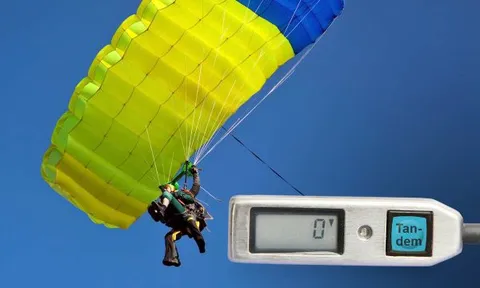
Purpose-built for tandem systems, with an activation altitude of roughly 1,900 feet (580 m) AGL at the same 78 mph descent rate as the Expert. Tandem canopies need far more altitude to open, and the parameters reflect that.

Best for: Tandem instructors and drop zones equipping tandem systems.

1,900 ft activation gives a large tandem canopy the altitude it actually needs · Accepted by tandem manufacturers and familiar to every tandem-rated rigger · Usually ordered in the two-cutter configuration that most tandem containers require

Two-pin configuration pushes the price to the top of the CYPRES range · Completely wrong for a solo sport rig, where it would fire far too high · Fixed mode, unlike the C-Mode unit or the multimode Vigil and m2

Wingsuit CYPRES 2 (WSC)
Premium

9. Wingsuit CYPRES 2 (WSC)

Airtec

$1,450–$1,650

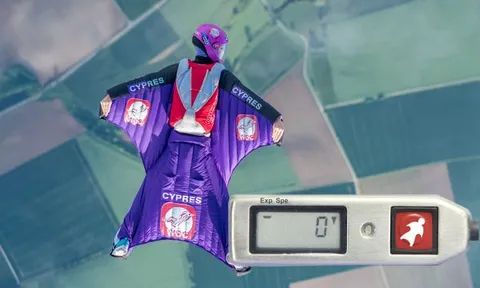
The only AAD designed around the fact that a wingsuit flight and the canopy flight that follows need different activation parameters. It starts on wingsuit parameters, detects the transition to canopy, switches, and tells you it has done so.

Best for: Active wingsuit pilots who want an AAD matched to wingsuit fall rates.

Two parameter sets in one jump, covering the low forward-speed risks of wingsuit flight · Announces the switch to canopy parameters, so you know which set is live · Canopy-phase parameters can be configured to Expert or Speed behavior

Produced in small quantities, so availability is limited and dealers often list it as special order · Priced at or above the top of the CYPRES range · Pointless for anyone who does not fly a wingsuit regularly

Budget

10. Model 12000 Automatic Parachute Ripcord Release

FXC Corporation

$850–$1,050

The mechanical outlier. It uses no battery, no squib and no pyrotechnic cutter, it is adjustable from 2,000 to 25,000 feet, and it pulls the ripcord when descent exceeds about 100 feet per second at the preset altitude. It survives in static line student and military programs, not in modern sport rigs.

Best for: Static line student programs and military users who need a battery-free device.

Fully mechanical, so there is no battery to replace and no electronics to age out · Wide preset altitude range from 2,000 to 25,000 feet suits high-altitude and military use · Cheapest way to put an activation device on a training or static line system

Requires periodic altitude chamber calibration and testing, which not every loft can do · Bulky and mechanically coupled to a ripcord, so it does not fit modern sport containers · US pricing is dealer quoted, and support is aimed at institutional buyers rather than individuals

How we choose

We built this list from manufacturer specification pages (cypres.aero, vigil.aero, m2aad.com) and from current dealer pricing at Para Gear, ChutingStar, The Ranch Pro Shop and European retailers, then ranked by what we would actually put in a rig for a licensed jumper or a student, not by price. Because the category is so price-compressed, the tiers here track street price rather than capability: budget means under about $1,150 (the MarS m2 multi and the mechanical FXC Model 12000), mid means roughly $1,250 to $1,450 (the Vigil Cuatro in its one-cutter and two-cutter forms, which you choose based on whether your reserve container is one-pin or two-pin), and premium means $1,400 and up, which in practice is the whole CYPRES 2 line. A more expensive unit in this category is not a safer unit. All three electronic manufacturers have long field records, and the deciding factors are mode fit, ownership cost over 15 to 20 years, and whether your rigger and drop zone are comfortable with the unit. We accept no payment from any manufacturer or dealer for placement, we bought nothing through a sponsored arrangement to write this, and no brand reviewed the text before publication.

Common questions

As a student in the US, effectively yes. Student and novice programs run on AAD-equipped rigs, and tandem manufacturers require them on tandem systems. Once you have a license it becomes your call, but many drop zones now require an AAD on every rig on the airfield, and some boogies and events require one to manifest. Check with the DZ before you show up with an AAD-less container.

Match the mode to what you jump, not to what sounds impressive. Expert CYPRES or Vigil Pro or m2 Professional covers normal freefall and fires around 750 to 1,100 feet at roughly 78 mph. Student modes raise the firing altitude and lower the speed threshold so the unit still triggers under a partially open canopy at around 29 to 45 mph, which is the exact scenario that hurts students. Speed and Xtreme and Canopy Piloting modes raise the speed threshold so a swoop does not trip the unit, and Tandem modes fire much higher because tandem canopies need more altitude. If your discipline is likely to change, buy a multimode unit.

More than the sticker, and the pattern differs by brand. A CYPRES 2 at $1,400 adds two factory service visits at 5 and 10 years, with the battery included, across a 15.5 year life. A Vigil Cuatro at about $1,290 has no scheduled service but needs a factory battery replacement between 8 and 12 years, commonly quoted around $200 to $250, across a 20 year life. A MarS m2 multi at about $1,076 has no factory maintenance and no battery change across 15 years 6 months or 15,000 jumps, whichever comes first. Divided over the life of the unit the three land within roughly $10 a year of each other.

This is decided by your reserve container, not by preference. A single-pin reserve container takes the one-cutter unit. A two-pin reserve container, which includes many tandem systems and a number of older and specialty sport rigs, needs the two-cutter version, and it costs roughly $110 to $150 more. Confirm with the rigger who will install it before you order, because the cutter configuration is not something you swap on a whim.

It can be, and it is common, but check four things before money changes hands: the manufacture date and the remaining service life, the service history (a CYPRES that has missed its 5 or 10 year service is not airworthy until it goes back), the cutter, which may have its own replacement interval or may have been fired, and whether the unit was ever submerged, dropped or subjected to a hard reserve ride. Have a rigger inspect and turn it on before you buy. A unit with three years left on it is worth roughly three years of price, not half of new.

Yes, and the causes are almost always human. Riding the aircraft down through the firing window, jumping into a landing area much lower than the takeoff elevation without setting an offset, and rapid pressure changes in an unpressurized descent have all triggered units. Student mode is the most sensitive to this, and Airtec specifically recommends switching a Student CYPRES off if the jump is aborted and you are riding down. Learn your unit's turn-on, turn-off and offset procedure from the manual, not from the loading area.

Some links are affiliate links, and we may earn a commission at no extra cost to you. It never affects our rankings.

In your pocket

Take every dropzone with you.

Free, no account needed. Dropzone maps, gear checklists, and your jump log in your pocket.

  • Every dropzone in your pocket

  • Round up your crew with group chat

  • Your jump log in one timeline

  • Prep checklists synced to your account

The Skydiving Hubs app dashboard

For operators

Run a skydiving business?
Get on the map for free.

Claim your free listing for a branded page and a spot in the Skydiving Hubs app, then add bookings and digital waivers whenever you’re ready. No setup cost.